

The 'Thief Mentality' in Learning Buddhism
In Buddhism, the practice of renunciation and bodhicitta is a way for us to attain worldly well-being, while cultivating the right view of emptiness is the way to attain transcendent happiness.

Methods for Severing the Link Between Saṃskāra and Afflictions (Part Three)
Another effective method is one-sided emptiness. If ultimate emptiness (śūnyatā) cannot be realized, we can use this provisional approach. When anger is felt, reflect that it is false, or directly experience it as false through conceptual insight—both methods work.

Methods for Severing the Link Between Saṃskāra and Afflictions (Part Two)
How do we use renunciation to deal with these various complex and chaotic mental factors? You must tell yourself: the movement of the mind is actually the root cause of everything in the world. Our suffering and happiness, the manifold appearances of the world—even the sun and the moon—fundamentally stem from the mind’s activity. All phenomena are but manifestations of mind.

Seemingly Simple Teachings, Yet Crucial for Practice
If we cannot feel the joy of Dharma during our practice, it is often because our minds are still entangled in worldly affairs, clinging to our own fame and wealth, success and failure, gains and losses, unable to detach from them.

How to Prevent Physical Suffering from Giving Rise to Afflictions (Part Two)
Khenpo Tsultrim Lodrö has also taught that when physical pain arises, the mind should not immediately follow with distress. Instead, one should instantly tell oneself: “While my body is in pain right now, I am willing to take this pain upon myself to replace the suffering of all sentient beings.”

How to Prevent Physical Suffering from Giving Rise to Afflictions (Part One)
When small discomfort arises, we should habitually turn inward to observe the mind, rather than focusing on the bodily pain itself. Focusing on the physical pain will amplify it, so we should not do that. Instead, we should observe the afflictions arising in the mind in response to this minor discomfort.

What is neutral feeling?
On the surface, these feelings or thoughts appear morally neutral, neither wholesome nor unwholesome. Yet, in reality, their underlying basis is not necessarily so—and all neutral states themselves are a form of ignorance (avidyā).

Is There a Single Pith Instruction that Can Make One Awaken?
To awaken through a single sentence, or to enter the Path with one blow, is not entirely impossible, but it is by no means something rigid or mechanical. Precisely because each person’s capacities differ, pith instructions must be tailored according to individual aptitude and adapted to circumstances. This is exactly the correct path of spiritual practice.

Why Does Bodhicitta Seem Ineffective After We Generate It?
The “constancy” of cultivating bodhicitta must last until all sentient beings are liberated. When there are no sentient beings left, bodhisattvas will no longer need bodhicitta. But sentient beings are inexhaustible—therefore, bodhisattvas can never be without bodhicitta.

How Can We Generate Genuine Renunciation (Part Three)?
The maturation of our mental continuum (citta-saṃtāna) also happens through this kind of gradual accumulation. We must continuously stimulate our thinking so that this focal point of reflection remains active and vivid. Only in this way can a genuine state of renunciation gradually take shape.

What should we do when interpersonal conflicts arise during spiritual practice?
When interpersonal conflicts arise within a group—contemplate renunciation in light of right view, observe your own mind, and let go of attachment.

What are afflictions?
We certainly would not say that a cup or the mountains and rivers outside have afflictions; we can only say that our mind has afflictions. In other words, affliction is not a form (rūpa), but a mind (citta). It is the functioning of consciousness, a mental activity unique to sentient beings.

What should we do when mindfulness (smṛti) is insufficient?
Usually, when we speak of impermanence (anitya), we think of intense suffering such as death. But that is not the whole picture—pleasant and enjoyable things are also inherently impermanent.

How Should We Counteract Doubt in Spiritual Practice?
Of course it does. First, through study and reflection, superstition is dispelled and genuine understanding is established, thereby eliminating preliminary doubt. Second, by relying on spiritual teachers and joining a community of practitioners, and by persevering in practice until direct experience arises, doubts that occur in the course of practice are gradually dissolved.

Avoiding Misunderstandings of Meditative Equipoise in the Nature of Reality
We aspire to realize emptiness; and to realize emptiness means liberation (mokṣa). When we genuinely sense that phenomena are not truly existent, we have already tasted a hint of liberation. Yet to feel that external appearances are utterly devoid of inherent existence—to feel it in the most vivid and direct way—that is dharmatā-samādhi.

A Brief Overview of the Three Main Approaches to Realizing Emptiness
The most direct and supreme method for realizing emptiness is the “direct pointing to the nature of mind” found in Dzogchen and Chan. It does not elaborate complex theories. Instead, it allows you, in a single instant, to recognize: What is the nature of mind? Who is reciting the Buddha’s name?
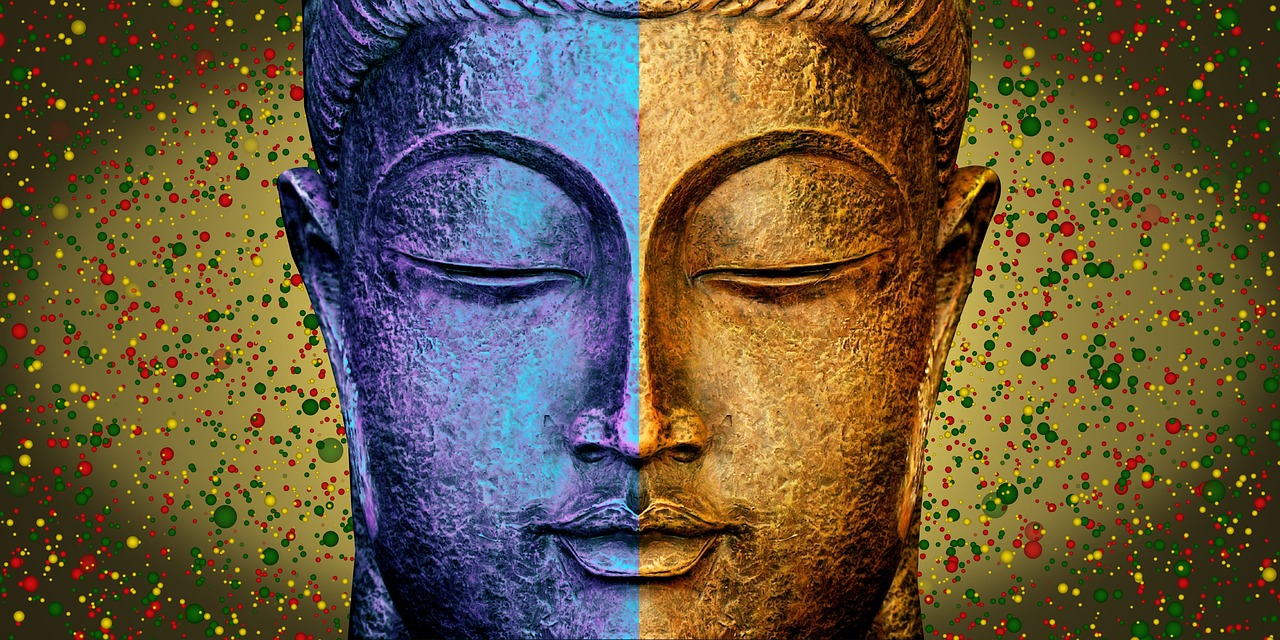
What is the right approach to practicing Buddhadharma?
To approach Buddhadharma safely and effectively, we should start by studying related texts and contemplating what we have learned from them. We can then deepen our understanding through meditative practice, both on the cushion and in daily life.

Do we truly have renunciation?
Many people who study Buddhism remain full of sorrow, pain, and anxiety. If you examine yourself deeply, down to the core, most of this is because there is no renunciation. Many people blame their Guru for not giving pith instructions or methods, but in fact, the Guru has already given everything.
The Desperate View of Life
What does it mean to say that the course of life is doomed to be a tragedy? Materialism posits that our lives are determined by our material composition, and this outlook suggests that to a large extent, our fate is beyond our control.

The Impact of Objective Idealism
It is important to take our faith seriously as it has a significant impact on our lives. However, if we follow a belief without being able to fully support it with evidence, it may be considered mere superstition.